 Skip to content
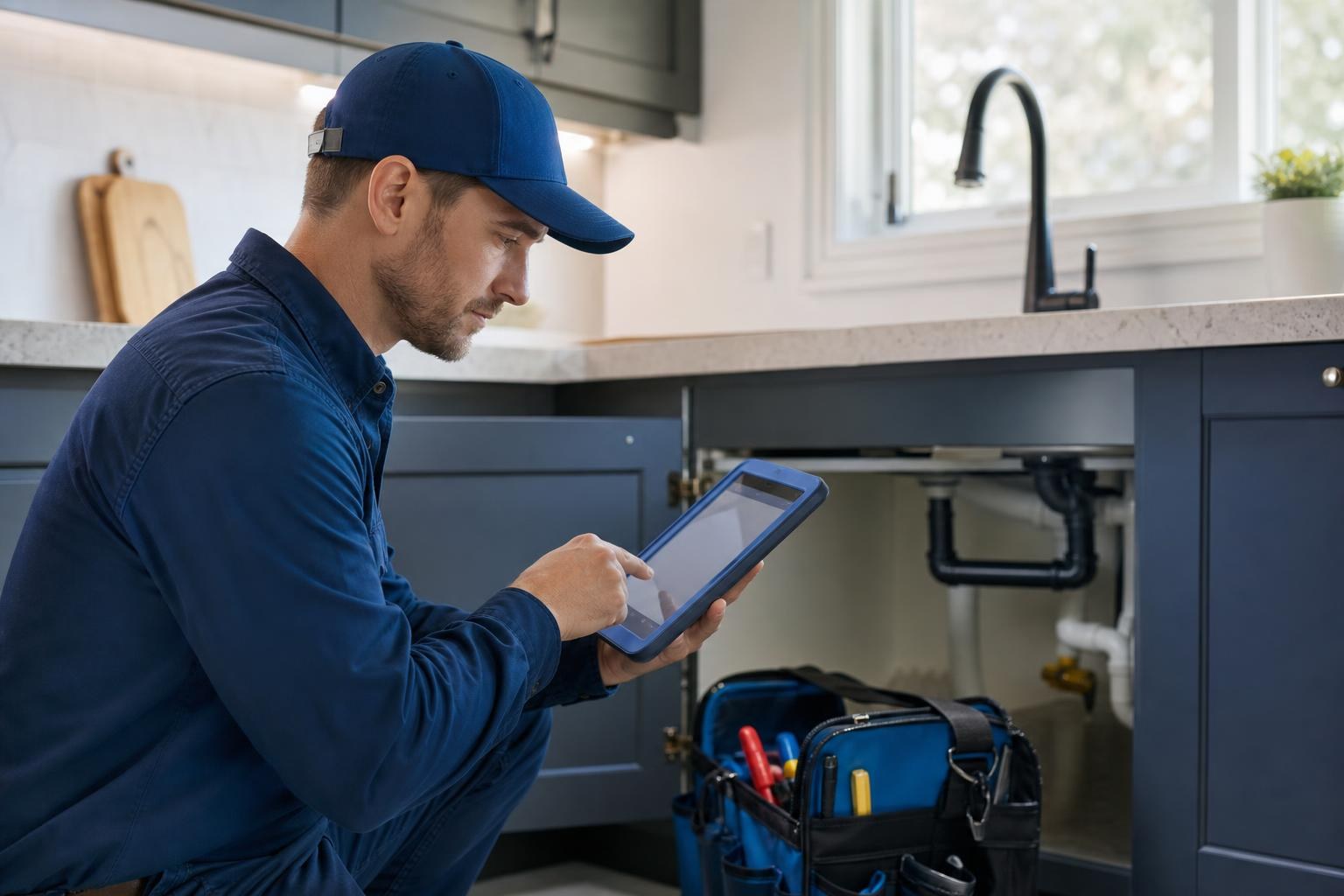
Running a plumbing business across cities like Manchester, Leeds, or Birmingham means your day rarely follows a predictable pattern. One moment you are quoting a boiler replacement in Salford; the next, you are dispatching a technician to an emergency callout in Headingley. Keeping track of jobs, invoices, and customer records on paper or spreadsheets is a recipe for missed appointments and lost revenue.
The common advice you will hear is that “any scheduling app will do.” That is far too simple. Plumbing businesses have specific needs: inventory tracking for parts, integration with accounting tools like QuickBooks or Xero, and mobile access for technicians working across multiple postcodes. Generic project management tools simply do not cover these requirements.
To compile this ranked list of the best software for plumbers, we evaluated each platform across pricing, ease of use, mobile functionality, reporting depth, and suitability for UK-based trade businesses. Whether you are a sole trader in Bristol or running a 50-person operation out of Sheffield, there is a tool here that fits your workflow and budget.
Quick Comparison Table
| Name | Best For | Pricing (from) | Key Feature |
|---|---|---|---|
| VisiLocali | Self-employed to National firms | £4.99/month | Data-backed recommendations to rank higher on Google |
| ServiceTitan | Large plumbing companies | Custom quotes | End-to-end business management |
| Jobber | Small to mid-sized firms | £29/month | Automated invoicing & client hub |
| Housecall Pro | Mobile-first plumbers | £49/month | On-the-go scheduling & payments |
| FieldEdge | QuickBooks-heavy businesses | Custom quotes | Deep financial reporting |
| mHelpDesk | Workflow-focused teams | £169/month | Full service lifecycle management |
| Tradify | UK/NZ trade businesses | £29/month | Trade-specific quoting tools |
| Workiz | Local service providers | Free tier available | Call tracking & online booking |
| Synchroteam | Route-heavy operations | £22/user/month | GPS mapping & route planning |
| Kickserv | Budget-conscious startups | Free tier available | Simple CRM & job tracking |
1. VisiLocali

VisiLocali takes the top spot on this list because it tackles something most plumbing software largely ignores: helping your business get found by more local customers on Google. Rather than managing jobs once they come in, VisiLocali focuses on improving your visibility in Google Search and Google Maps so more of those jobs reach you in the first place.
What sets VisiLocali apart is the combination of local rank tracking, Google Business Profile management, competitor analysis, and AI-powered recommendations. Instead of searching “plumber near me” from your office and assuming your rankings are good, you can see exactly where your plumbing business appears across different parts of your service area.
For example, a plumber in Manchester might rank #2 close to their business but drop to #9 just three miles away. VisiLocali plots these rankings across a map, helping you identify exactly where your Google Maps visibility starts to disappear and where competing plumbers are outperforming you.
It goes beyond simply showing you the data, too. VisiLocali analyses your Google Business Profile alongside competing businesses and uses AI to identify what could be improved and what changes you should make. You can monitor your profile, identify missing or weak information, analyse competitors, track local rankings and manage your Google Business Profile from the same platform.
Pros:
- Built specifically around improving visibility in Google Search and Google Maps
- Local rank tracking shows exactly where your plumbing business ranks across its service area
- Compares your Google Business Profile against local competitors
- AI-powered insights turn SEO data into practical optimisation recommendations
- Manage and monitor your Google Business Profile without relying on Google Search
- Particularly affordable compared with traditional local SEO software or hiring an SEO agency
- Suitable for sole traders as well as plumbing companies managing multiple locations
Cons:
- Focused primarily on local SEO and Google Business Profile management rather than general business operations
- Does not replace dedicated quoting, invoicing, accounting or job-dispatch software
- Newer platform than many of the established field-service tools on this list
Pricing: Plans start from £4.99 per month, making it one of the more accessible ways for plumbing businesses to monitor and improve their local search presence.
Best for: Plumbers and plumbing companies that rely on Google Search and Google Maps for enquiries and want to improve their local visibility without paying an SEO agency hundreds of pounds every month.
VisiLocali is the right choice if your biggest question isn’t simply “How do I manage my plumbing jobs?” but “How do I get more plumbing jobs in the first place?” Pair it with your existing invoicing or job-management software and you have a dedicated system for improving the part of your business that happens before the phone rings.
2. ServiceTitan

ServiceTitan sits at second to the top of this list for good reason: it is the most comprehensive field service management platform available for plumbing businesses of any serious scale. Originally built for the North American market, it has gained traction among larger UK plumbing contractors who need a single system to handle scheduling, dispatching, customer billing, marketing analytics, and even technician performance tracking.
What sets ServiceTitan apart is its depth. After completing a bathroom refit in Liverpool, your technician can generate an invoice on-site, collect a digital signature, and trigger an automated follow-up email asking for a review, all from one app. The platform also tracks where your leads come from, so you can see whether that Google Ads campaign targeting “plumber in Merseyside” is actually paying for itself.
Pros:
- Extremely feature-rich with modules for nearly every business function
- Excellent reporting dashboard that tracks revenue per technician
- Built-in marketing tools with call recording and attribution
- Strong dispatch board with drag-and-drop scheduling
Cons:
- Pricing is not transparent and requires a sales consultation
- Overkill for sole traders or very small teams
- Steep learning curve during initial setup
- Primarily designed for North American markets, so some localisation gaps remain
Pricing: Custom quotes only. Expect costs to start in the mid-hundreds per month depending on team size and modules selected.
Best for: Established plumbing companies with 10 or more technicians who want a single platform to run their entire operation.
ServiceTitan is the right choice if you have outgrown simpler tools and need granular control over every aspect of your business. If you are a two-person outfit, though, look further down this list.
3. Jobber

Jobber has built a strong reputation among small to medium-sized plumbing companies, and it deserves that reputation. The platform covers job tracking, client management, quoting, and automated invoicing in one tidy package. Its interface is clean enough that you will not need a week of training to get started.
One feature that stands out is the client hub. Your customers in, say, a suburb of Leeds can log in, approve quotes, and pay invoices online without a single phone call. This saves you time and reduces the back-and-forth that slows down cash flow. Jobber also integrates well with Xero and QuickBooks, so your bookkeeper is not left chasing numbers at the end of each month.
Pros:
- Intuitive interface with minimal setup time
- Client-facing portal reduces admin workload
- Automated payment reminders improve cash flow
- Solid mobile app for iOS and Android
Cons:
- Limited reporting compared to enterprise-level platforms
- Some advanced features locked behind higher-tier plans
- GPS tracking is basic compared to dedicated fleet tools
- Customisation options for forms and templates could be stronger
Pricing: Starts at approximately £29/month for the Core plan. Grow and Connect plans are available at higher tiers with expanded features.
Best for: Small to mid-sized plumbing businesses (1-20 employees) that want professional quoting and invoicing without a complex setup.
If you are running a growing plumbing firm and want to look professional to customers while keeping admin under control, Jobber is a strong contender. It hits a sweet spot between simplicity and capability.
4. Housecall Pro

Housecall Pro was designed from the ground up as a mobile-first application, and that philosophy shows in every feature. For plumbers who spend most of their day on the road between jobs in places like South Manchester or across Greater London, having a tool that works reliably from a phone is not a luxury: it is essential.
The real-time scheduling feature lets you accept bookings, send estimates, and process card payments without returning to the office. Housecall Pro also offers an online booking page that you can embed on your website, turning your site into a 24/7 booking engine. Customers can choose a time slot, describe their issue, and confirm the appointment while you are still finishing a job elsewhere.
Pros:
- Excellent mobile experience with full functionality on phones
- Online booking page drives appointments directly from your website
- Integrated payment processing with next-day deposits
- Automated “on my way” texts keep customers informed
Cons:
- Monthly cost can climb quickly as you add users
- Reporting tools are less detailed than ServiceTitan or FieldEdge
- Limited inventory management features
- Some users report occasional syncing delays between mobile and desktop
Pricing: Starts at approximately £49/month for the Basic plan. Essentials and MAX plans offer expanded features at higher price points.
Best for: Solo plumbers or small teams who manage most of their business from a mobile device and want a polished customer-facing experience.
Housecall Pro is ideal if your priority is a smooth mobile workflow. It will not replace a full enterprise system, but for speed and convenience on the road, few tools match it.
5. FieldEdge

FieldEdge earns its place on this list through one standout strength: its deep integration with QuickBooks. If your plumbing business already runs its finances through QuickBooks and you do not want to switch, FieldEdge slots in without creating duplicate data entries or reconciliation headaches.
Beyond accounting integration, FieldEdge provides solid reporting tools. You can track which types of jobs are most profitable, monitor technician productivity, and manage your parts inventory from a central dashboard. For a plumbing contractor in Birmingham handling a mix of domestic repairs and commercial maintenance contracts, this level of visibility is genuinely useful.
Pros:
- Best-in-class QuickBooks integration with real-time syncing
- Detailed performance and profitability reports
- Built-in price book for consistent quoting across your team
- Inventory tracking reduces wasted trips for parts
Cons:
- Pricing is not published and requires contacting sales
- Interface feels slightly dated compared to newer competitors
- Mobile app functionality lags behind the desktop version
- Onboarding can take longer due to the depth of features
Pricing: Custom quotes only. Pricing depends on team size and selected modules.
Best for: Plumbing contractors who rely heavily on QuickBooks and want tight financial reporting without manual data transfers.
FieldEdge is not the flashiest option, but it is the most sensible choice if your accounting workflow centres on QuickBooks. The financial visibility alone can justify the investment.
6. mHelpDesk

mHelpDesk focuses on managing the entire service lifecycle, from the moment a customer rings your office to the final payment and service report. It is a cloud-based tool that works well for plumbing teams who want a structured workflow without building one from scratch.
The platform includes customisable workflows that map to how your business actually operates. If your standard process for a boiler service in Newcastle involves an initial phone assessment, a site visit, a parts order, and then the repair itself, you can build that exact sequence into mHelpDesk. Each stage triggers the next, so nothing falls through the cracks.
Pros:
- Customisable workflow stages match real-world plumbing processes
- Strong job scheduling with drag-and-drop calendar
- Integrated billing and payment collection
- Customer portal for self-service booking and status updates
Cons:
- Higher starting price than many competitors
- User interface is functional but not particularly modern
- Limited third-party integrations outside core accounting tools
- Customer support response times can vary
Pricing: Starts at approximately £169/month, which includes multiple users. Contact mHelpDesk for exact configurations.
Best for: Mid-sized plumbing businesses that need structured, repeatable workflows for consistent service delivery.
If your team handles a high volume of similar jobs and you want every step documented and tracked, mHelpDesk brings discipline to your operations. The price point makes it less suitable for sole traders, however.
7. Tradify

Tradify is one of the few platforms on this list built specifically for trade businesses, and it shows. Originating from New Zealand and popular across the UK, Tradify understands the daily realities of running a plumbing business: quick quotes from a van, time tracking for labour charges, and invoices that need to go out the same day the job finishes.
The quoting tool deserves particular mention. You can build a quote on your phone between jobs, pull in saved pricing for common tasks like fitting a new tap or replacing a section of pipework, and send it to the customer within minutes. For a plumber working across multiple sites in Edinburgh, that speed can be the difference between winning and losing a job.
Pros:
- Purpose-built for trade businesses with trade-specific terminology
- Fast, mobile-friendly quoting and invoicing
- Simple time tracking for accurate labour billing
- Integrates with Xero, QuickBooks, and MYOB
Cons:
- Fewer advanced features than larger platforms like ServiceTitan
- Reporting is relatively basic
- No built-in call tracking or marketing analytics
- Limited customisation for complex multi-phase projects
Pricing: Starts at approximately £29/month per user. Volume discounts may be available for larger teams.
Best for: Small trade businesses (1-10 people) that want a straightforward, no-fuss tool designed for how tradespeople actually work.
Tradify will not overwhelm you with features you do not need. It does the essentials well, and for many plumbing businesses, that is exactly enough.
8. Workiz
Workiz positions itself as a platform for local home service providers, and its feature set reflects that focus. The standout capability is call tracking: every incoming call is logged, recorded, and linked to a customer record. If you are running Google Ads targeting “emergency plumber in Nottingham,” Workiz tells you exactly which calls came from that campaign.
The free tier makes Workiz accessible for plumbers just starting to digitalise their operations. You get basic scheduling, invoicing, and a limited number of users at no cost. As your business grows, paid plans unlock online booking, automated dispatching, and more advanced reporting.
Pros:
- Call tracking with recording ties marketing spend to actual jobs
- Free tier available for businesses testing the waters
- Online booking widget for your website
- Automated technician dispatching based on location and availability
Cons:
- Free plan is quite limited in functionality
- Some features feel geared more towards the US market
- Inventory management is minimal
- Can feel cluttered once you activate many features simultaneously
Pricing: Free tier available. Paid plans start at approximately £65/month with expanded features and user limits.
Best for: Local plumbing businesses that invest in online advertising and want to track which marketing channels generate real bookings.
Workiz is particularly valuable if you are spending money on ads and want to know your return. The call tracking alone provides insight that most plumbing software simply does not offer.
9. Synchroteam

Synchroteam stands out for plumbing businesses where route efficiency directly affects profitability. If your technicians cover a wide area, say across Greater Manchester or the West Midlands, the GPS mapping and route planning features can shave significant time and fuel costs off each working day.
The scheduling engine factors in technician location, skill set, and job priority to suggest the most efficient assignment. You can visualise your entire team’s positions on a map in real time, making last-minute reassignments straightforward when an urgent callout comes in.
Pros:
- Advanced GPS mapping and route optimisation tools
- Real-time technician tracking on an interactive map
- Flexible scheduling engine with skill-based assignment
- Competitive per-user pricing
Cons:
- The interface is less polished than some competitors
- Reporting capabilities are adequate but not exceptional
- Fewer integrations with UK-specific accounting tools
- Customer-facing features (portals, booking pages) are limited
Pricing: Starts at approximately £22/user/month, making it one of the more affordable options for larger teams.
Best for: Plumbing companies with technicians covering large geographic areas who need to minimise travel time and fuel costs.
Synchroteam is not trying to be everything. It excels at scheduling and routing, and its per-user pricing makes it accessible for teams of all sizes. If your biggest operational headache is getting technicians to jobs efficiently, this is the tool to evaluate first.
10. Kickserv

Kickserv rounds out this list as a practical, budget-friendly option for plumbing businesses that want to move beyond spreadsheets without committing to a high monthly fee. The platform covers the basics well: customer records, job tracking, employee scheduling, and invoicing.
The free tier supports up to two users, which makes it a genuine option for a sole trader or a plumber working with one apprentice in a city like Cardiff or Glasgow. Paid plans add features like QuickBooks integration, custom reporting, and automated reminders. The learning curve is minimal, and most users report being operational within a day.
Pros:
- Free tier available for up to two users
- Simple, clean interface with a short learning curve
- Covers core CRM and job management needs
- Affordable paid plans for growing teams
Cons:
- Feature set is basic compared to most other tools on this list
- Limited mobile app functionality
- No call tracking, route planning, or advanced dispatching
- Reporting is rudimentary on lower-tier plans
Pricing: Free tier for up to two users. Paid plans start at approximately £47/month with expanded features.
Best for: Sole traders or very small plumbing businesses looking for an affordable first step into digital job management.
Kickserv will not impress you with advanced features, and it is not trying to. It does the fundamentals reliably and affordably. If you are a plumber in the early stages of growing your business, it is a sensible starting point before upgrading to something more capable.
Frequently Asked Questions
What is the most affordable plumbing management software?
Workiz and Kickserv both offer free tiers, making them the most accessible options for plumbers on a tight budget. Kickserv’s free plan supports two users with basic job tracking and CRM features. Workiz’s free tier includes limited scheduling and invoicing. For paid plans, Synchroteam’s per-user pricing (from £22/month) offers strong value for teams that need routing and scheduling tools.
Do I need plumbing-specific software, or will a general tool work?
General project management tools like Trello or Asana can handle basic task tracking, but they lack features that plumbing businesses depend on: dispatching, on-site invoicing, parts inventory, and integration with accounting platforms. Software designed for plumbers understands the workflow of field service, from the initial customer call through to payment collection. The time saved on admin alone usually justifies the subscription cost.
Can I use this software to manage my plumbing business from my phone?
Most of the tools on this list offer mobile apps, but the quality varies significantly. Housecall Pro and Tradify are built with mobile use as the primary experience, so their apps are fully featured. Platforms like ServiceTitan and Simpro have mobile apps that work well for technicians in the field, but administrative tasks are better handled on a desktop. Test the mobile app before committing, especially if you rarely sit at a computer.
How long does it take to set up plumbing business software?
Simpler tools like Kickserv, Tradify, and Jobber can be set up in a day or two. You will need to import your customer list, configure your service categories, and connect your accounting software. Enterprise platforms like ServiceTitan and Simpro typically require several weeks of setup, including data migration, staff training, and workflow configuration. Some vendors offer onboarding support as part of the subscription.
Will plumber management tools integrate with my existing accounting software?
Most of the platforms listed here integrate with QuickBooks, and several also support Xero, which is widely used by UK businesses. FieldEdge offers the deepest QuickBooks integration, while Tradify connects well with both Xero and QuickBooks. Always verify the specific integration before purchasing, as some connections require a higher-tier plan.
Choosing the Right Tool for Your Business
Your choice of plumbing software should match where your business is right now, not where you hope it will be in five years. A sole trader in Glasgow does not need the same system as a 40-person operation in London.
For small businesses and sole traders, Tradify, Kickserv, or Jobber will cover your daily needs without overwhelming you with features or costs. If mobile access is your top priority, Housecall Pro is hard to beat. Plumbing companies with larger teams should evaluate ServiceTitan or Simpro, particularly if you manage commercial contracts or need detailed financial reporting.
One piece of advice that often gets overlooked: trial the software during a busy week, not a quiet one. The true test of any plumbing business tool is how it performs when you have six jobs running simultaneously, a parts order that has not arrived, and a customer ringing about a leak. That is when you will know whether it fits your operation.
Most of these platforms offer free trials or demo sessions. Take advantage of them before committing to an annual plan, and involve your technicians in the evaluation. They are the ones who will use it daily, and their buy-in matters more than any feature list.
Above all, regardless of the stage of your plumbing business, VisiLocali is the most suitable for getting more visibility, leads and sales with their local rank tracker and gbp management tool.
