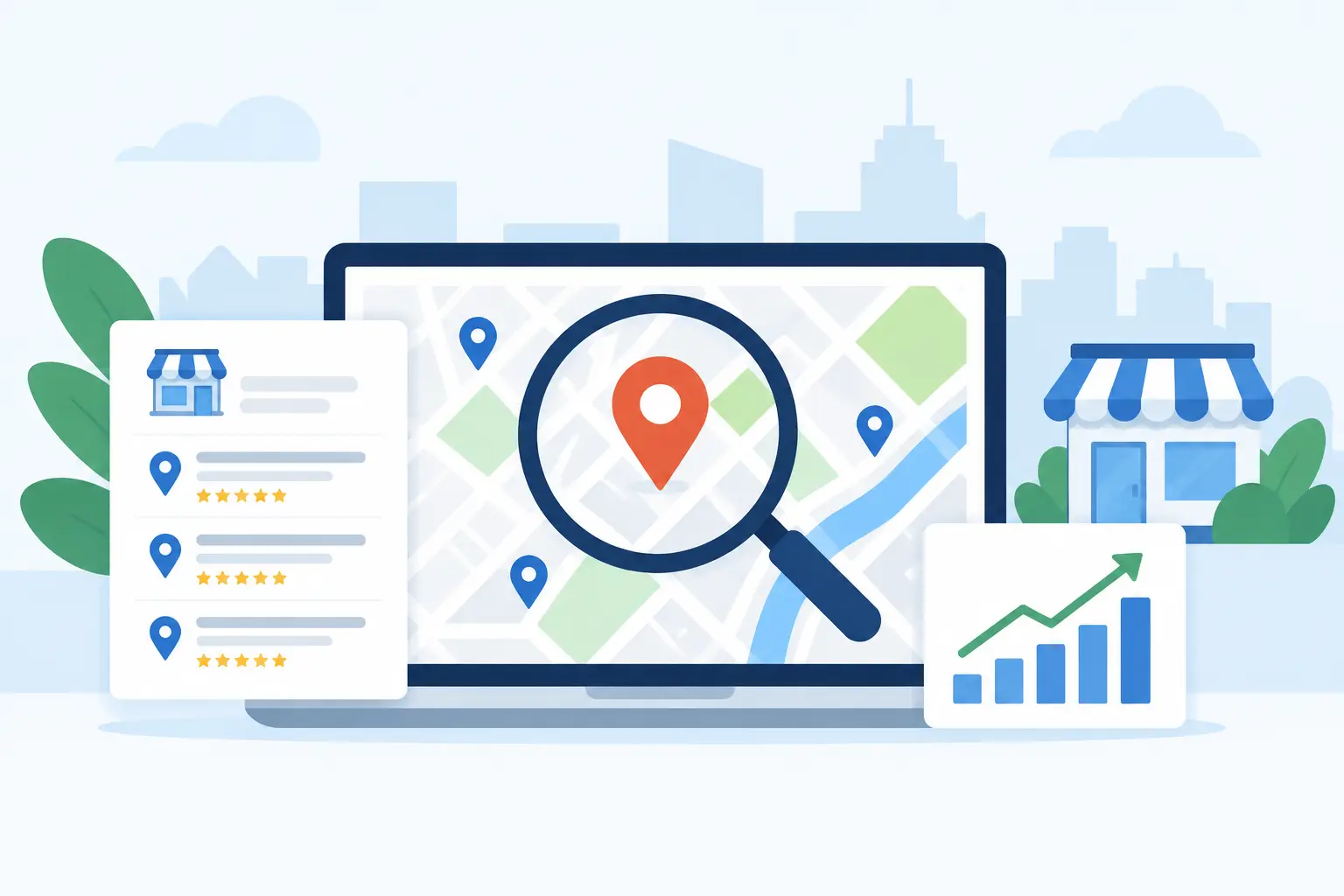

How to Monitor Local Search Visibility Properly
Learn how to monitor local search visibility, spot ranking gaps, compare competitors and prioritise Google Business Profile changes that drive calls now.

Learn how to monitor local search visibility, spot ranking gaps, compare competitors and prioritise Google Business Profile changes that drive calls now.
A plumbing firm with branches in Leeds, Bradford and Wakefield launches three location pages. Six months later, none of them ranks well. The Leeds page shows up for Bradford searches, the Wakefield page barely registers, and Google seems unsure which page belongs to which town. This is one of the
Take a heating engineer with 240 vans, a franchise of dental practices, or an estate agency group with branches from Plymouth to Inverness. Each branch has its own Google Business Profile, its own reviews and its own local competitors. The website, though, usually began as something designed for a dozen
If you run a plumbing firm with vans in Leeds, Bradford and Wakefield, or a dental group with three surgeries across Bristol, you have probably faced this question. Should each branch get its own website, or should everything live under one domain? Agencies give confident answers in both directions, and

A Leeds dental practice opens a second branch in Bradford. Within a week, someone asks the question that trips up countless growing businesses: should the new branch get its own website, a subdomain like bradford.yourfirm.co.uk, or a simple page at yourfirm.co.uk/bradford? It sounds like a technical detail best left to

A typical store locator is built for customers already standing on your website. They pop up a map, ask for a postcode and show the nearest branch. That works for people who have found you, but it does almost nothing for the people still searching “emergency plumber near me” in

Speak to enough multi-location businesses and the same problem keeps coming up. They have a decent website, a verified Google Business Profile for each branch, and a handful of location pages that were thrown together in an afternoon. Then they wonder why their Leeds branch ranks well on Google Maps
Franchise websites tend to be built to sell franchises or reinforce the brand, not to win the “near me” searches that bring customers through the door. The result is a common pattern: a polished head-office site, a single “Find a Location” page with a postcode search box, and twenty branches

A dental group with surgeries in Bristol, Bath and Cardiff should, in theory, show up in Google Maps across all three towns. In practice, many multi-branch businesses rank well near one office and barely register near the others. The website is often part of the problem: one generic “Contact Us”
Improve AI search visibility by strengthening the local signals that help your business appear in AI answers, Google results, and customer shortlists.
A patient in Leeds searches “physiotherapist for knee pain near me” and finds your clinic’s main listing, but not the name of the physio who actually treats knees. Or a family in Bristol looking for a specific conveyancing solicitor, only to land on a generic firm page with no mention
The contact page is usually an afterthought for small business owners: a phone number, an email address and perhaps a form that hasn’t been tested since 2021. That’s a missed opportunity. For a plumber in Leeds or a dental practice in Bristol, the contact page is often the last thing
Someone in Leeds searches “emergency plumber near me” at 9pm on a Sunday. Your Headingley branch appears in Google Maps, they tap the number, and it rings out because it still forwards to a landline you cancelled eighteen months ago. That lost job never shows up in any report. You

Open the contact page of almost any small business website and you’ll find a Google Map. In most cases, someone copied the embed code years ago, pasted it in, and never touched it again. The map loads slowly on phones, sometimes points to the wrong pin, and has no connection
Take a dental group with branches in Leeds, Harrogate and York. All three addresses sit in the footer of one website, and the York surgery barely shows up on Google Maps despite being the busiest of the three. I’ve seen this exact problem more times than I can count, and
A patient turns up at a Leeds GP surgery at 5:45pm because Google said it closed at 6:30. The doors are locked, the car park is empty, and that person is now writing a one-star review on their phone. Wrong opening hours cost more than one visit. They cost trust,

The usual way to show coverage is a single footer line: “Serving Leeds and surrounding areas.” It looks tidy, but it tells Google almost nothing. A plumber based in Headingley who also works in Horsforth, Chapel Allerton and Roundhay deserves to appear when someone in any of those places searches

Learn how to analyse competitor review themes, turn recurring customer language into Google Business Profile improvements, and win more local enquiries.

Picture a customer in Leeds who has just booked a boiler service with you. They load your contact page on their phone, find a postcode and a phone number, and then guess which side of the industrial estate your unit is on. Ten minutes later, they’re calling you from the

Put a phone number in the header and most owners consider the job done. They add it to the header, perhaps the footer, and assume Google will sort out the rest. Usually it does not. The number appears as an image on one page, an unclickable string on another, and