 Skip to content

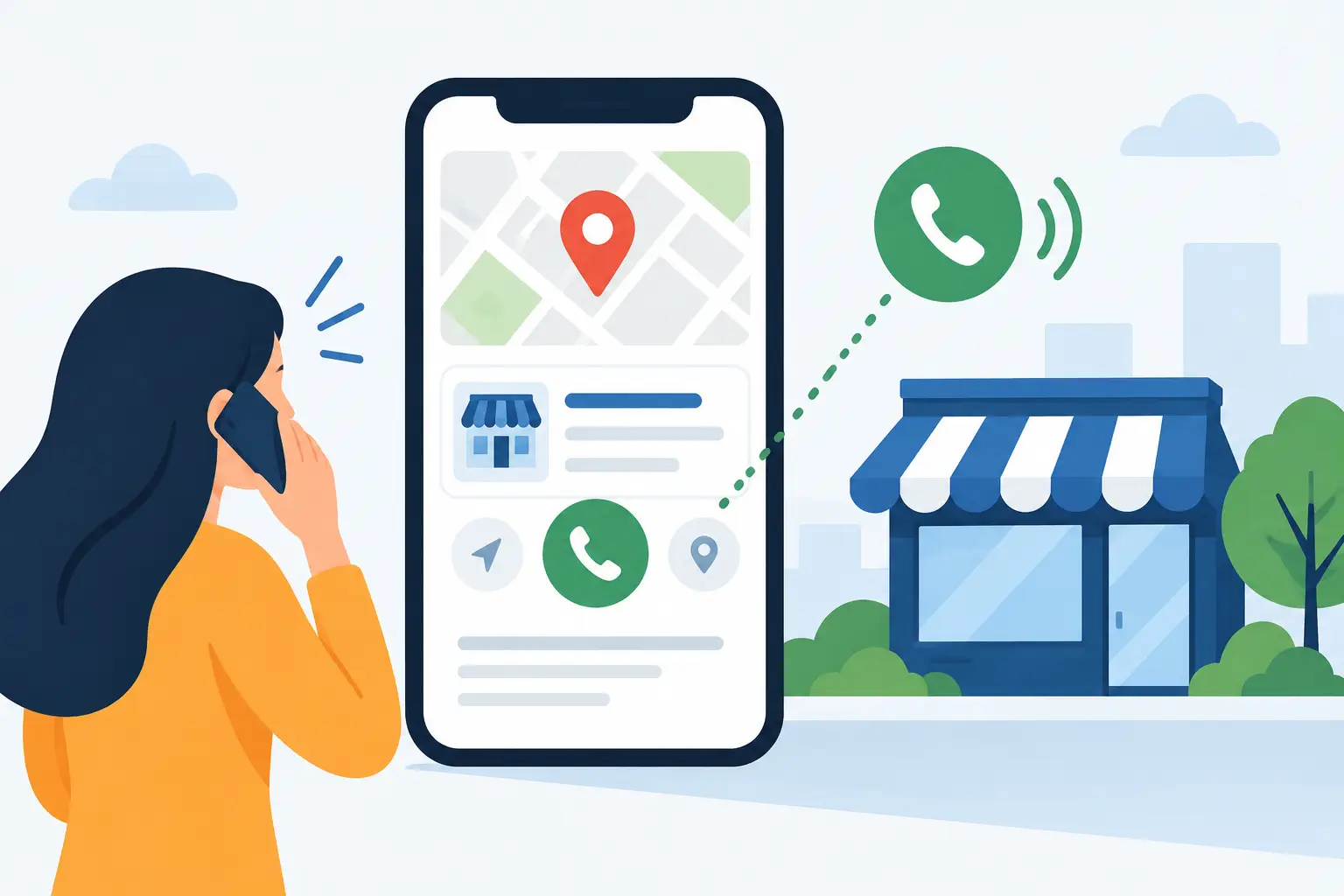
A customer searches “emergency plumber near me”, sees three local businesses, checks opening hours, reads two reviews and taps Call. They never visit a website. That is the reality of zero click local searches – and it can be highly valuable for businesses that depend on calls, bookings, directions and walk-ins.
The mistake is treating a website visit as the only sign that local SEO is working. For many high-intent searches, Google Business Profile information is the destination. If your profile answers the customer’s question quickly and gives them confidence to act, the search has done its job.
What are zero click local searches?
A zero-click search happens when someone gets what they need directly from Google’s results page rather than clicking through to a website. In local search, this usually means the customer finds an answer in the local pack, Google Maps or a business profile.
They may check whether you serve their area, view your hours, read recent reviews, look at photos, compare your rating with nearby competitors or use the Call, Directions, Website and Booking buttons. No website click does not mean no customer action.
For a café, the decision may be based on opening hours, menu photos and distance. For a locksmith or electrician, it may come down to whether the business is open now, looks legitimate and has strong recent reviews. For a clinic, customers may need clear services, appointment availability and evidence that others had a positive experience.
The common factor is intent. The closer someone is to choosing a provider, the less patience they have for incomplete or unclear information.
Why zero click local searches matter to local businesses
Local customers do not usually want to research SEO. They want an answer. Google is built to provide one as quickly as possible, particularly on mobile where calls, map directions and booking actions are only a tap away.
That changes how performance should be judged. Website traffic remains useful, especially for complex services, high-value jobs and customers who need detailed information before enquiring. But a fall in clicks is not automatically a fall in demand. It may mean Google is showing more of your useful business information before the click.
The more useful question is: are local searchers taking the actions that lead to revenue?
For a service-area business, that may be calls and quote requests. For a salon, it may be appointment bookings. For a retailer or restaurant, it may be direction requests and visits. Your Google Business Profile needs to support those outcomes, not simply occupy space in the results.
There is a trade-off. Google controls the profile experience, and you have less opportunity to explain your full offer than you do on your own website. That is why the information Google does show must be accurate, persuasive and consistent with the service you actually provide.
What customers see before they choose
A customer does not assess every part of a profile in order. They scan for signals that reduce risk and make the next step easy. If your profile is missing the basics, they will often move to the next business without giving you a second chance.
Relevance to their immediate need
Your primary category, additional categories, services and business description help Google understand what you offer. They also help customers decide whether you are right for the job.
A vague profile creates uncertainty. A heating engineer that lists only a broad category may miss searches for boiler repairs, radiator issues or emergency call-outs. A dental practice that does not clearly show relevant services may lose patients looking for a specific treatment.
Use categories and services to reflect genuine work you want to win. Do not add every possible service in the hope of appearing more often. Relevance matters more than clutter, and inaccurate claims create poor leads as well as disappointed customers.
Confidence that you are credible
Reviews, ratings, owner responses and photos do heavy lifting in zero click local searches. They are often the quickest evidence that a real, active business stands behind the listing.
Recent reviews matter because they show the experience customers can expect now, not two years ago. Detailed reviews can also reinforce the services and locations you want to be known for, although wording should always be genuine rather than coached.
Responding well to reviews is equally practical. A short, specific reply shows prospective customers that you pay attention. For negative feedback, a calm response can protect confidence more effectively than silence or defensiveness.
Certainty that they can contact or visit you
Wrong hours, an unanswered phone number, outdated service areas and inaccurate map details create immediate friction. These are not minor admin issues. They can turn an interested searcher into a competitor’s customer.
Keep regular hours, special hours, telephone number, booking options and service areas current. If you operate from home or visit customers at their premises, manage the profile as a service-area business rather than showing an address customers cannot use.
How to make zero click local searches work harder
The goal is not to cram every profile field with keywords. It is to remove doubt at each point where a local customer could hesitate.
Start with the fundamentals. Check that your business name follows Google’s guidelines, your main category is the best match for your core offer, and your contact details are correct. Then review services, service areas, opening hours, attributes and photos through a customer’s eyes. Could someone understand what you do, where you work and how to contact you in under a minute?
Next, look beyond your own profile. Local visibility is relative. You are competing against the businesses Google shows for the searches that matter in each area. A competitor may rank above you because they have a more relevant category, stronger review momentum, better service information or greater prominence in that location.
This is where generic advice falls short. “Get more reviews” is not a plan if the competitor ahead has a weaker rating but better category coverage and a more complete profile. You need to know exactly which gaps are holding you back before deciding what to improve.
Track rankings by location and search term, not just one broad average. A business may perform well near its base but barely appear in neighbouring towns where it wants more work. For service-area businesses, this distinction is especially important: visibility can change street by street, not only town by town.
Then prioritise changes by likely commercial impact. A missing emergency service, incorrect holiday hours or poor review response rate may be more urgent than adding another photo. Make the changes that help a ready-to-buy customer choose you today, while building the profile quality that supports rankings over time.
Measure actions, not just clicks
A zero-click strategy needs reporting that matches the way customers behave. Watch profile interactions such as calls, website visits, direction requests and bookings alongside local ranking movement, review trends and competitor changes.
No single metric tells the whole story. Calls can rise while website visits fall. Rankings can improve without immediate growth in bookings if demand is seasonal. Direction requests may matter far more to a restaurant than to a mobile tradesperson. The right measure depends on your business model and the action that normally precedes a sale.
It also helps to check lead quality. More calls are only useful if they are from customers in your service area who need the work you provide. Clear service information and accurate areas help filter poor-fit enquiries before they reach your phone.
A platform such as VisiLocali can bring rank tracking, competitor comparison, profile analysis, review performance and profile management into one place. The practical advantage is not having more reports. It is being able to see the next worthwhile action, make the change and measure whether it improved visibility and customer response.
Do not neglect your website
Zero click does not mean website-free. Your website still supports trust, detailed service explanations, larger enquiries, tracking and organic visibility beyond the map results. It can also help customers who are comparing providers more carefully or researching an expensive decision.
Think of the profile and website as different stages of the same decision. Your profile wins attention and makes immediate action easy. Your website answers deeper questions when customers need more reassurance. Keep the details aligned across both, particularly services, locations, phone numbers and opening hours.
The businesses that gain from zero-click behaviour are not trying to force every searcher onto a webpage. They make it easy for the right customer to choose them wherever the decision happens. When your profile is complete, credible and measured against real local competitors, Google visibility becomes less about guessing and more about giving customers a clear reason to call, book or visit.
