 Skip to content

Most local businesses I speak to have the same story. They set up a Google Business Profile years ago, listed themselves on a handful of directories, and then forgot about it. Meanwhile, the plumber across town who opened in 2023 now appears above them in Google Maps for “emergency plumber Leeds”, and nobody can explain why.
Very often, part of the answer lies in citations: the scattered mentions of your business name, address and phone number across the web. They aren’t glamorous, and they won’t transform your rankings overnight. Messy citations do quietly erode Google’s confidence in your business details, though. Clean, consistent ones support everything else you do.
This guide explains how to build local citations properly. It covers which platforms matter, how to audit what already exists, and how to keep everything accurate without losing your weekends to directory forms. It’s written for established service businesses that already have a website and a GBP and want to know what to prioritise next.
The Fundamentals of Local Citations and SEO Impact
A citation is any online mention of your business’s core details. It might be a full listing on Yell, a mention in a local news article, or an entry in a trade association’s member directory. Google uses these mentions as corroborating evidence. If dozens of trusted sources agree that “Harper & Sons Electrical” operates from a specific address in Bristol, Google can show that business to nearby searchers with more confidence.
Be realistic about their weight. Citations are one supporting signal among many. Your Google Business Profile, reviews, proximity to the searcher and relevance to the search term generally carry more influence. Think of citations as foundations: nobody admires them, but a weak foundation undermines everything built on top.
Understanding NAP Consistency (Name, Address, Phone)
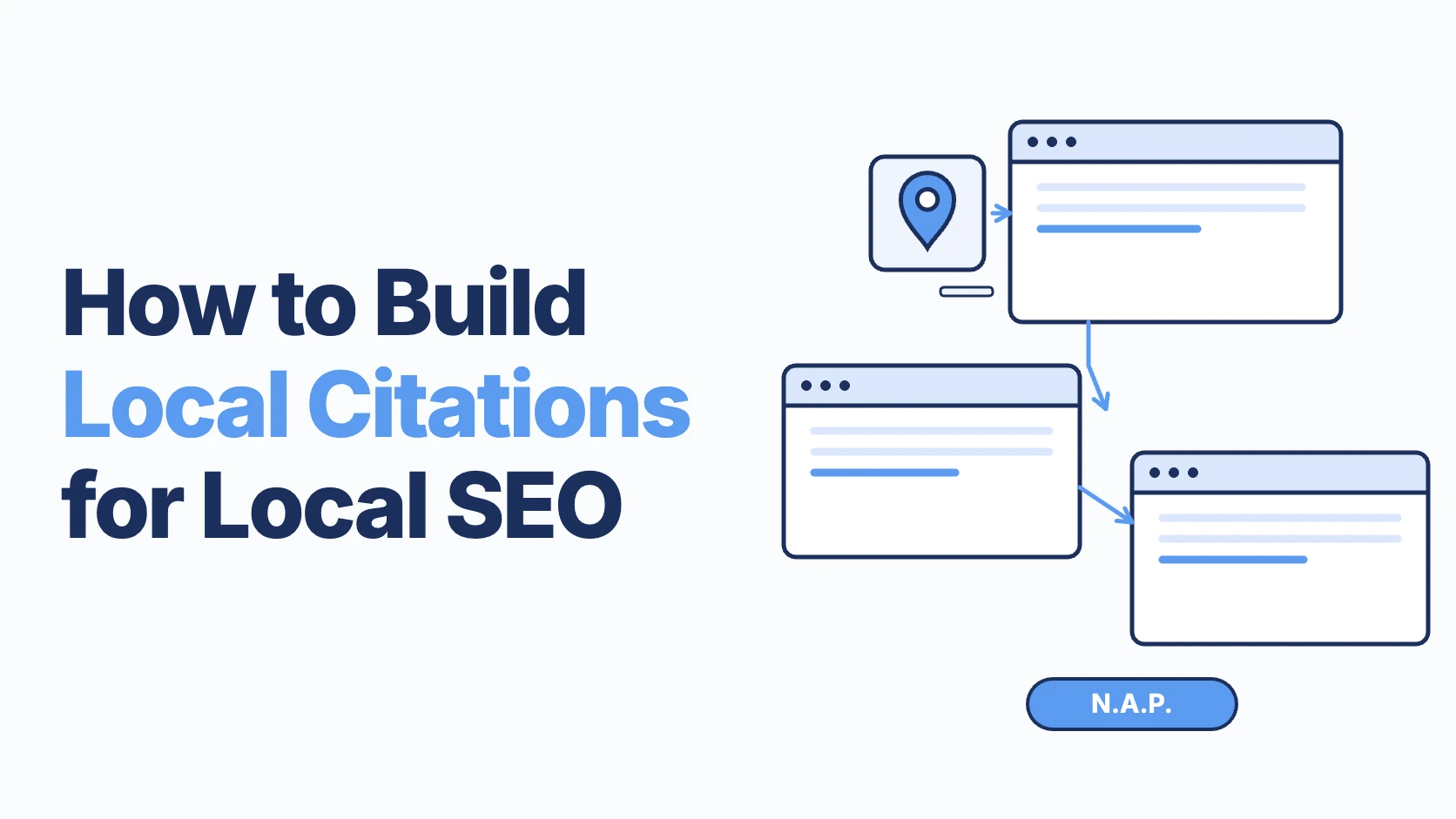
NAP stands for name, address and phone number, and consistency is the whole point. Small discrepancies add up. “Unit 4, Riverside Park” on one site, “4 Riverside Business Park” on another, and an old landline on a third create doubt about which version is correct.
Pick one canonical version of your details and use it everywhere. That means deciding on:
- Business name: your real trading name, without keyword stuffing such as “Smith Roofing Manchester Best Roofers”
- Address format: whether you write “Unit 4” or “Unit 4,” and whether you include the county
- Phone number: a local number rather than a tracking number that changes, ideally in the same format throughout
- Website URL: consistent use of https and www (or not)
Write this down in a shared document. Every listing you create from now on should copy it exactly.
Structured vs Unstructured Citations
Structured citations live in business directories with set fields for name, address, phone, hours and category. Yell, Thomson Local, Bing Places and Facebook pages all fall into this group. You control them, and they’re relatively quick to create.
Unstructured citations appear in ordinary content: a blog post from a local wedding planner recommending your florist shop, a write-up in the Manchester Evening News, or a mention on a charity sponsor page. These are harder to earn, but they tend to carry more trust because they look like genuine endorsements. A healthy profile has both.
Optimising Your Core Business Profiles
Before you touch any directory, get your main profiles right. These platforms feed maps and voice assistants used by millions of people, and they’re where most customers will actually find you.
Google Business Profile Best Practices
Your GBP is the single most important citation you have, and it’s far more than a listing. It’s often the first impression a customer gets, whether they’re checking opening hours before a bank holiday or looking for a dentist’s number after a chipped tooth on a Saturday.
Make sure the basics are flawless. Your NAP should match your canonical version exactly. Choose a primary category that describes your core service (“Electrician” rather than “Contractor”), then add relevant secondary categories. List your services with clear descriptions, set accurate opening hours including special hours for holidays, and upload real photos of your team, vehicles and completed work.
Activity matters too. Regular Google Posts, fresh photos and prompt responses to reviews show the profile is maintained. A quick way to spot gaps is the VisiLocali GBP Audit Tool, which reviews your business information, categories, reviews and posts, then tells you in plain English what to fix next. That’s far more useful than an arbitrary score out of 100.
Leveraging Apple Maps and Bing Places
Plenty of business owners ignore Apple Maps, which is a mistake. Every iPhone user asking Siri for “a locksmith near me” is drawing from Apple’s data. Claim your listing through Apple Business Connect, verify it, and add photos, hours and categories just as you would on Google.
Bing Places is quicker still because it lets you import details directly from your Google Business Profile. Bing’s data also flows into other services, so twenty minutes here reaches further than you might expect. Check the imported details carefully before publishing, as imports occasionally drag across outdated hours or categories.
Identifying High-Authority Data Aggregators
In the US, citation building revolves heavily around a few large data aggregators that distribute business data to hundreds of downstream sites. The UK picture is different and more fragmented, which catches out businesses following American guides.
For UK businesses, the sources that matter most tend to be the large platforms that other services pull from or that customers genuinely use:
- Apple Business Connect and Bing Places: feed maps, voice search and assistants
- Yell: still one of the most established UK directories
- Thomson Local and Scoot: long-running UK listings with wide data reach
- Foursquare: supplies location data to a surprising number of apps and services
- Facebook: both a citation and a place where customers check reviews
- Companies House: not a directory you edit freely, but your registered details should align with your trading information where relevant
Data providers such as these matter because errors spread. If Foursquare holds an old address from when you shared a unit on a different industrial estate, that mistake can surface in apps you’ve never heard of. Fixing the source once is far more efficient than chasing every copy.
Don’t assume a platform is valuable just because it claims huge reach. Ask two questions: do real customers use it, and does it pass data elsewhere? If the answer to both is no, it probably isn’t worth your time.
Finding Niche and Location-Specific Directories
Once your core profiles and major platforms are sorted, the next layer is relevance. A listing on a site specific to your trade or town often matters more than one on a generic directory nobody visits.
Industry directories come first. Tradespeople should look at Checkatrade, TrustATrader, MyBuilder and Rated People, plus accreditation bodies such as Gas Safe, NICEIC or the Federation of Master Builders, depending on their trade. A solicitor’s firm should be listed with the Law Society’s Find a Solicitor service. Estate agencies benefit from Propertymark membership listings, and restaurants from TripAdvisor and OpenTable. These sites carry topical relevance and often send genuine enquiries.
Location-specific sources are the second layer. Think about chamber of commerce member directories, Business Improvement District websites, local council supplier lists, community sites and “shop local” initiatives. A Glasgow café might find opportunities through neighbourhood guides, while a Bristol physiotherapist could appear on a local running club’s recommended partners page.
To find these, try searches like:
- “[your trade] directory UK”
- “[your town] business directory”
- “[your town] chamber of commerce members”
- “[competitor name]” plus your town, to see where they’re listed
Sponsorships and memberships are a reliable route to unstructured citations as well. Sponsoring a junior football team for £250 a season frequently earns a mention on the club website, and it’s a genuine community gesture rather than a box-ticking exercise.
Step-by-Step Manual Citation Building Process
Doing this manually takes longer, but you keep full control and learn exactly where your business appears. Here’s the process I recommend for a typical service business.
- Finalise your canonical NAP. Agree the exact name, address, phone and URL format with anyone who might create listings, including your web designer or office manager.
- Prepare an asset pack. Gather a 100-word and a 250-word business description, your logo, five to ten good photos, opening hours, service list and service areas. Having this ready cuts each listing down to a few minutes.
- Set up a dedicated email address. Something like [email protected] keeps verification emails and login details in one place and survives staff changes.
- Start with core profiles. Complete Google, Apple and Bing before anything else.
- Move to major UK directories. Work through Yell, Thomson Local, Foursquare, Facebook and similar.
- Add industry and local listings. These are often the most valuable for relevance and real referrals.
- Log everything in a spreadsheet. Record the URL, login details, date submitted, verification status and the exact NAP used.
- Complete verification promptly. Some platforms post a PIN or call your number. Unverified listings can sit in limbo indefinitely.
Aim for quality over volume. Thirty accurate, complete listings on relevant sites beat 200 thin entries on spammy directories. If a site looks abandoned, is stuffed with adverts, or asks you to pay to be listed with no clear audience, skip it.
Pace yourself, too. Five or six listings a week is manageable alongside running a business, and it gives you time to complete each profile fully rather than rushing through half-finished entries.
Conducting a Comprehensive Citation Audit
Most established businesses already have citations, whether they created them or not. Directories scrape data, former staff set up accounts, and previous marketing agencies may have built listings years ago. An audit tells you what’s out there before you add more.
Start by searching Google for your business name, your phone number in quotes, and your old address if you’ve ever moved. Note every listing you find in your spreadsheet, marking whether the details are correct, partly wrong or completely outdated. Check the big platforms individually, as some don’t always rank for your name.
Fixing Duplicate and Incorrect Listings
Duplicates are the most common problem I see, particularly for businesses that have moved premises or rebranded. A Leeds dental practice that relocated in 2021 might still have its old address on six directories, sending patients to an empty building. That’s a lost appointment and a frustrated customer, not just an SEO issue.
Prioritise fixes in this order:
- Your Google Business Profile: check for duplicate profiles and request removal or merging through Google’s support routes
- Major platforms and data providers: correct the sources that feed other sites
- High-visibility directories: anything that ranks on page one for your business name
- Everything else: work through the remaining listings over time
Claim each listing where possible, then update rather than delete, because an edited listing preserves its history. If a site won’t let you claim or edit, contact its support team directly and keep a record of your request.
Analysing Competitor Citation Profiles
Your competitors’ listings are a free roadmap. If the three plumbers outranking you in Manchester all appear on the same trade directory and local business association site, that’s a strong hint about where you should be listed too.
Search for competitors’ names and phone numbers in the same way you searched for your own. Make a list of directories they appear on that you don’t. Pay particular attention to niche and local sources, as these are where gaps tend to show.
Citations rarely tell the whole story of why a competitor outranks you, though. Their review count, profile completeness, categories and posting activity often matter more. VisiLocali’s competitor analysis compares stronger competitors against your profile and points to the practical gaps worth closing, so you’re not guessing whether directories or reviews deserve your attention first.
Automated Tools vs Manual Management Services
There are three broad ways to handle citations, and the right choice depends on your size and how much time you have.
Manual work suits single-location businesses with someone organised enough to keep a spreadsheet updated. It costs nothing but time, typically 15 to 25 hours spread across a couple of months for an initial build. You keep direct ownership of every account, which matters if you ever change agencies.
Automated distribution tools push your details to a network of directories at once and can update them all when something changes. They’re useful for multi-location businesses or anyone who moves premises. Check one detail carefully: some services keep your listings accurate only while you’re subscribed, and listings may revert or lapse when you cancel. Ask before you pay.
Managed services, where a specialist builds and cleans up citations for a one-off fee, sit in between. They’re a sensible option for businesses with a messy history of duplicates, as long as the provider hands over login details and a full report.
| Approach | Best for | Main trade-off |
|---|---|---|
| Manual | Single-location businesses with time | Slow, needs discipline |
| Automated tools | Multi-location or frequently changing details | Ongoing cost, possible lock-in |
| Managed service | Messy legacy listings, time-poor owners | Upfront cost, quality varies |
Whichever route you take, don’t let directories distract from your Google Business Profile. That’s where most local visibility is won or lost, and it needs ongoing attention rather than a single setup.
Measuring Success and Maintaining Your Local Presence
Citations are hard to measure in isolation, which is why so many businesses give up on them. Instead of looking for a single ranking jump, track the bigger picture: are you appearing in Google Maps for more searches, in more parts of your service area?
This is where geo-grid rank tracking earns its place. Rather than checking your ranking from one spot, the VisiLocali Local Rank Tracker plots your Google Maps position across a grid of points covering your target area. You might discover you rank third near your office in Headingley but drop off the map entirely two miles away in Roundhay. That visual picture shows exactly where you’re strong and where competitors dominate, so you can judge whether cleanup work and profile improvements are actually translating into visibility.
Alongside rankings, keep an eye on:
- Calls, direction requests and website clicks from your Google Business Profile
- Referral traffic and enquiries from directories in your website analytics
- Leads mentioning specific platforms such as Checkatrade or Yell
Maintenance matters as much as the initial build. Review your main listings every quarter, and immediately after any change to your phone number, hours or address. Watch for unexpected edits on your GBP too, since Google accepts suggestions from the public and occasionally changes details without warning. The VisiLocali GBP Management Tool monitors your profile for changes and lets you manage posts, photos and reviews from one place, which saves the classic scenario of a customer arriving at a locked door because the hours were quietly altered.
The businesses that get the most from citations treat them as housekeeping rather than a project. Set your canonical details, fix what’s broken, add relevant listings steadily, and keep your Google Business Profile at the centre of everything. VisiLocali was developed by a local SEO specialist with over a decade of experience and comes with a 90-day Improvement Guarantee, so you’re not left guessing whether your changes are working.
If you’d like to see where you currently stand, start a 14-day Free Trial on any plan: Monitor, Entrepreneur or Agency. Card details are needed at sign-up to prevent trial abuse, but you’ll have two full weeks to audit your profile, map your rankings and get a clear list of what to fix first.
