 Skip to content

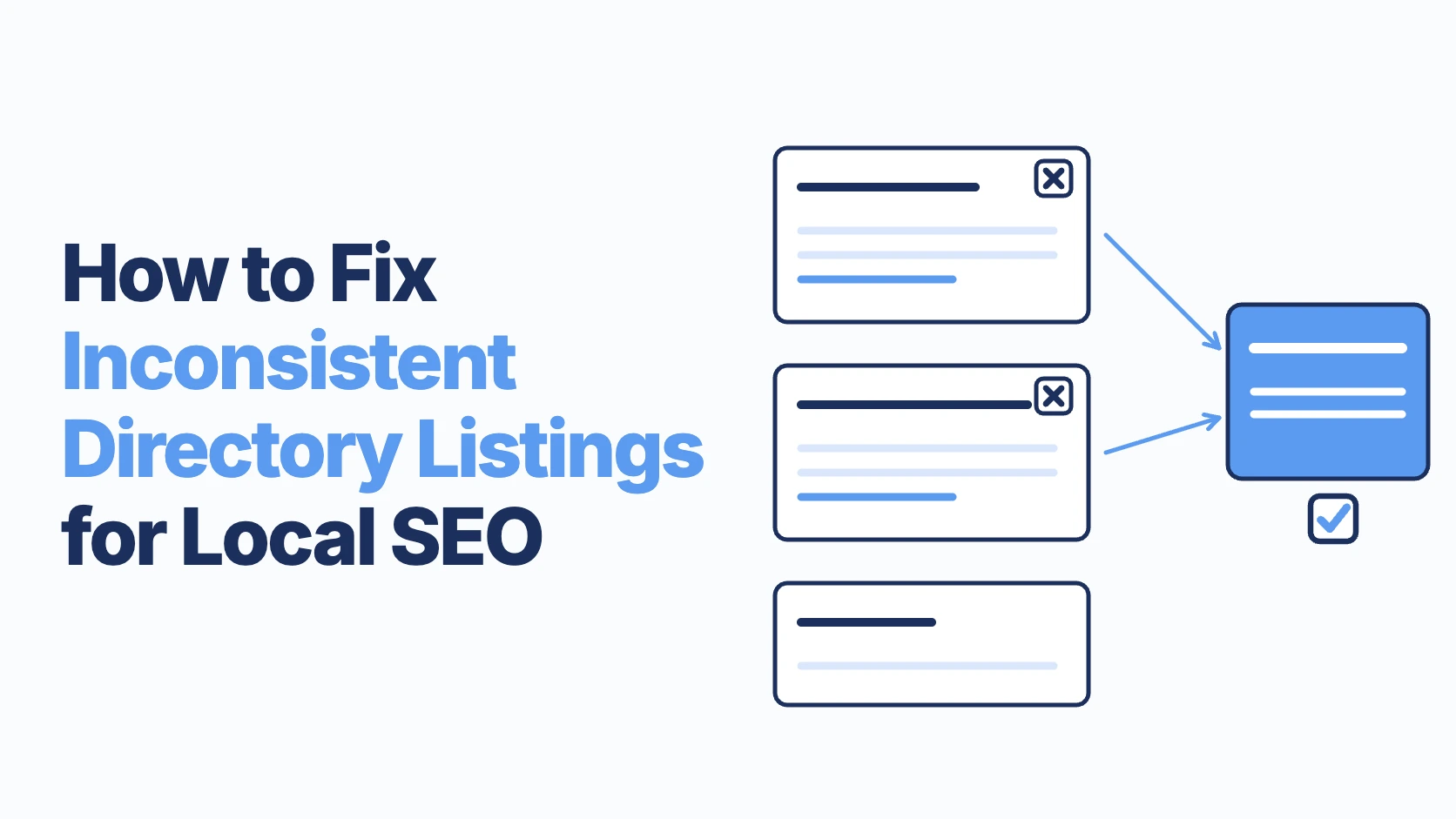
If your business name, address or phone number appears three different ways across the internet, Google notices. It may not penalise you outright, but it does start to doubt which version is true, and doubt is expensive in local search.
I’ve seen a Leeds plumbing firm lose a steady stream of emergency callouts because an old Yell listing still showed a disconnected mobile number. I’ve seen a Bristol dental practice appear twice on Google Maps, splitting its reviews between two profiles. Neither business had done anything wrong recently. The problems came from years of small changes, forgotten sign-ups and data scraped by sites they had never heard of.
The good news is that this is fixable, and you don’t need an agency retainer to do it. What you need is a clear process: find the errors, decide what “correct” looks like, fix the listings that matter most, and then stop the mess from creeping back. This guide covers how to fix inconsistent directory listings for local SEO in a practical order, with the Google Business Profile at the centre. That’s where most of your visibility is won or lost, so it’s where your effort should go first.
The Impact of NAP Consistency on Local Search Rankings
NAP stands for name, address and phone number. Search engines use these three details to confirm that your business is real, that it operates where it says it does, and that the information customers see is reliable. When directories, review sites and data providers all agree, that agreement acts as a quiet vote of confidence.
When they disagree, Google has to make a judgement call. Say your Google Business Profile shows “Smith & Sons Electrical Ltd, Unit 4, Kirkstall Road, Leeds”, but Bing, Yell and a trade association site show “Smith and Son Electricians, 4 Kirkstall Rd”. Each variation is minor. Together, though, they make it harder for search engines to link those mentions to one entity. The citations you’ve built over the years stop reinforcing each other.
I’d be cautious about anyone who claims that citations alone will push you into the top three on Google Maps. They won’t. Relevance, distance and prominence carry far more weight, and your Google Business Profile, reviews and website do most of the heavy lifting. Inconsistent data is better understood as a drag on everything else. It weakens trust signals you’ve already earned.
There’s also a human cost that gets overlooked. A customer who finds your old number on a directory and gets no answer doesn’t try again. They ring the next tradesperson on the list. A patient who turns up at a clinic’s previous address on a Saturday morning isn’t going to leave a five-star review. Consistency is as much about protecting real enquiries as it is about rankings.
Conducting a Comprehensive Audit of Existing Citations
Before you change anything, you need a complete picture of what’s already out there. Skipping this step is the most common mistake I see. Businesses fix the five listings they remember, then wonder why the wrong phone number keeps resurfacing.
Start by searching Google for your business name in quotation marks, then repeat the search with your phone number, your old phone numbers and any previous addresses. Each version will turn up different listings. Record everything in a spreadsheet with columns for the site, the URL, the name shown, the address, the phone number, the website link and whether you have login access.
Expect this to take a few hours for a single-location business that’s been trading for five years or more. It’s tedious work, but the spreadsheet becomes your fix list, and you’ll refer back to it for months.
Identifying Incorrect Data on Core Data Aggregators
Not all directories are equal. Some sites act as sources that feed business data to dozens of smaller platforms, sat-nav systems, voice assistants and apps. If one of these sources holds the wrong details, correcting smaller sites one at a time is like mopping the floor while the tap’s still running.
In the UK, the most influential sources include:
- Google Business Profile : the single most important listing by a wide margin
- Apple Business Connect : powers Apple Maps and Siri results on iPhones
- Bing Places : feeds Bing search and several other services
- Yell : still widely scraped and referenced by smaller UK directories
- Facebook : frequently used by people checking opening hours and contact details
- Companies House : your registered details here can be copied elsewhere, so check that your trading name and registered address aren’t causing confusion
Check each one carefully, including the less obvious fields such as opening hours, category and website URL. A wrong website link (say, an old http:// address or a dead page) creates its own consistency problem.
Uncovering Duplicate Listings and Ghost Profiles
Duplicates are often more damaging than errors, because they split your reviews, photos and authority across two or more profiles. They usually appear after a move, a rebrand, a change of phone number, or when a former employee or marketing company created a listing years ago.
Search Google Maps for your business name and also for your category plus your street name. Look for profiles with your old name, a slightly different spelling, or a pin in the wrong place. Ghost profiles, meaning listings for businesses that have closed or moved, can also pick up calls meant for you if they share your old number. Note every duplicate in your spreadsheet, along with which profile has the most reviews. That one is usually worth keeping.
Establishing a Single Source of Truth for Business Data
Here’s where most clean-up projects quietly fail. People start editing listings before agreeing on what the correct details actually are, and end up creating a fresh set of variations.
Before you touch a single directory, write down one definitive version of your business data. This becomes the reference document everyone uses: you, your office manager, your web developer and anyone you hire for marketing. Keep it in a shared document and treat it as the final word.
Your master record should include:
- Business name : exactly as it appears on your signage and in the real world. Don’t add keywords such as “Best Boiler Repair Manchester”. It breaches Google’s guidelines and creates inconsistency.
- Address : the full format you’ll use everywhere, including unit numbers and postcode.
- Primary phone number : ideally a local landline or a consistent mobile, not a call-tracking number that changes by campaign.
- Website URL : the exact version, including whether you use https and www.
- Opening hours : standard hours, plus how you’ll handle bank holidays.
- Primary category and service description : a short, consistent description you can reuse.
The phone number deserves particular thought. If you use call tracking, keep your main local number as the primary contact on directories and Google, and use tracking numbers only where the platform allows an additional number. Swapping your primary number for a different tracking line on every site is a reliable way to undermine your own consistency.
Your Google Business Profile should match this record exactly, because it’s the profile Google trusts most and the one customers see first. Every other listing should mirror it.
Step-by-Step Guide to Manual Listing Rectification
With your audit spreadsheet and master record ready, the actual fixing can begin. Work in order of importance: Google first, then the major data sources, then the directories that rank on page one for your business name, then everything else.
That order matters because time is finite. A Glasgow estate agency doesn’t need to correct an obscure directory with no traffic before sorting out Apple Maps, which millions of iPhone users rely on daily.
Claiming and Verifying Unmanaged Directory Profiles
Many of the listings you found will be “unclaimed”, meaning they were created automatically from scraped data and nobody at your business controls them. You can usually claim them by clicking a link such as “Is this your business?” or “Claim this listing“.
Verification methods vary. Most sites use an email to an address on your domain, a phone call or text to the listed number, or a postcard to the business address. That’s why fixing the phone number and address on major listings early can make later claims easier.
A few practical tips:
- Create a dedicated email address, such as [email protected], and use it for every directory account. When staff leave, you won’t lose access.
- Store every login in a password manager, not a sticky note.
- If a listing can’t be claimed, look for a “suggest an edit” or “report incorrect information” option.
- For duplicates you can’t delete, ask the platform to merge them or mark them as permanently closed or a duplicate.
Some directories will try to upsell you a paid listing during the claim process. You rarely need it. A free, accurate listing is enough for consistency purposes.
Standardising Address Formats and Phone Number Syntax
Small formatting differences add up. “Unit 4” versus “4”, “Road” versus “Rd”, “0113 496 0000” versus “+44 113 496 0000”: search engines are reasonably good at interpreting these, but there’s no reason to make their job harder.
Pick one format and stick to it everywhere. For UK addresses, I’d recommend following the Royal Mail style, with the unit or flat number first, then the building name, street, town and postcode. Write street types in full unless the directory’s form forces an abbreviation.
For phone numbers, use the national format with consistent spacing, such as 0161 496 0000 for a Manchester number, unless a platform specifically asks for the international version. If a site’s form splits fields in an odd way, follow the form, but keep the underlying digits identical. The aim is that a human or a machine reading any two of your listings would instantly see they describe the same business.
Leveraging Automated Tools for Large-Scale Cleanup
Manual fixes work well for a single location with 30 or 40 citations. Once you’re dealing with multiple branches, a rebrand, or a long history of moves, doing it by hand becomes a part-time job.
Citation management services can push your master data to a network of directories at once and, in some cases, suppress duplicates. They’re useful, but they come with trade-offs worth understanding before you pay. Some only keep your listings corrected while you’re subscribed, and the data can drift back once you cancel. Others cover directories that carry little weight with UK customers. Ask any provider which UK sites they actually distribute to, and whether changes persist after cancellation.
My view is that automation works best as a supporting act, not the main event. The listings that drive most of your visibility are a small group: Google Business Profile, Apple, Bing, Facebook and the top few industry directories. Those deserve direct, careful attention. Automation is for the long tail.
Whatever tool you use, it should tell you what to fix and in what order rather than just giving you a percentage score. A “citation health score of 72%” doesn’t tell a busy roofer in Sheffield what to do on Tuesday afternoon. A specific list saying “update phone number on Bing Places, remove duplicate Maps listing at old address” does.
This is also where measuring impact matters. After a clean-up, the VisiLocali Local Rank Tracker shows your Google Maps positions across a visual ranking grid of your target area. Rather than a single average position, you see a map of where you appear in the top three, where you drop off, and where competitors are stronger. If removing a duplicate profile consolidates your reviews, you can watch visibility change across specific neighbourhoods over the following weeks.
Optimising Google Business Profile to Anchor Your Local Identity
If you only have time to perfect one listing, make it this one. Your Google Business Profile is the most visible representation of your business in local search, and it’s the version of your details that other platforms, and Google itself, treat as the reference point.
Start by checking that every field matches your master record. Then look beyond NAP:
- Primary category : choose the most specific option that describes your main service. An emergency plumber shouldn’t be categorised simply as “Contractor”.
- Service areas : for tradespeople who travel to customers, set realistic areas rather than listing every town in the county.
- Opening hours and special hours : update for bank holidays and Christmas well in advance. Few things lose trust faster than a customer arriving to a locked door.
- Website link : point to the most relevant page, and make sure it shows the same NAP in the footer or contact page.
- Business description : consistent with the description you use elsewhere, without keyword stuffing.
There’s one risk many owners don’t realise exists: Google and members of the public can suggest edits to your profile, and some changes go live without you approving them. I’ve seen opening hours altered, a phone number swapped and a business wrongly marked as closed. You can do everything right on 50 directories and still have your most important listing changed overnight.
That’s why I’d suggest running the VisiLocali GBP Audit Tool once your citation clean-up is underway. It reviews your business information, profile optimisation, reviews, posts and other signals, then uses AI to explain what’s missing and what to tackle next, in plain English rather than a technical report. Alongside it, the VisiLocali GBP Management Tool monitors your profile for unexpected changes, so an incorrect edit gets spotted before it costs you a week of calls.
Prioritising Industry-Specific and Niche Directories
General directories confirm that you exist. Industry directories confirm that you’re a credible business in your field, and they often send customers who are much further along in their decision-making.
The right list depends on your trade. A Gas Safe registered heating engineer should make sure their entry on the Gas Safe Register matches their master record exactly. Electricians may appear on NICEIC or NAPIT. Tradespeople often have profiles on Checkatrade, TrustATrader, MyBuilder or Rated People. Solicitors appear on the Law Society’s Find a Solicitor service, accountants on their professional body’s directory, and healthcare providers on NHS and regulator listings.
These sites are worth prioritising for three reasons:
- Customers use them directly, often when they’re ready to book.
- Many rank well in Google for searches combining a service and a town.
- Membership bodies are trusted sources, so errors there can carry more weight.
They’re also the listings most likely to be wrong, because they’re often set up once when you join and never revisited. A heating engineer who moved from Stockport to Altrincham three years ago may have updated Google immediately but left the old address on two trade bodies.
A quick way to find which niche directories matter in your area is to search for your main service plus your town, then look at which directories appear on page one. If competitors are listed there and you’re not, or you’re listed with outdated details, that’s a clear priority. Tools that show why competitors outrank you can speed this up, since gaps in citations and profile signals often explain a lot of the difference.
Maintaining Long-Term Accuracy through Proactive Monitoring
Here’s the uncomfortable truth: a clean set of listings doesn’t stay clean. Data aggregators refresh their records, scraper sites copy outdated information, staff create new accounts, and well-meaning customers suggest edits. Six months after a thorough clean-up, it’s normal to find a few new errors.
The businesses that stay consistent treat listings as ongoing maintenance, like servicing a van, rather than a one-off project. They have a named person responsible, a master record that’s kept current, and a routine for checking the listings that matter most.
Managing Data Changes During Business Relocations
A move is the single biggest cause of inconsistent citations. If you’re relocating, plan the listing changes as carefully as the removal van.
- Update your master record first , including the exact new address format and any new phone number.
- Change Google Business Profile on moving day , not before. Updating early can confuse customers still visiting your old premises. Expect to re-verify.
- Update Apple, Bing and Facebook within the same week.
- Work through your audit spreadsheet , starting with industry directories and the sites that rank for your business name.
- Keep your old phone number active with a redirect for at least 12 months if you’re changing numbers. Old listings will keep surfacing.
- Don’t create a new Google profile for the new address. Edit the existing one so you keep your reviews and history.
If you’re closing one branch and keeping another, mark the closed location as permanently closed rather than deleting it. This tells Google and customers clearly what’s happened.
Regular Auditing Cycles to Prevent Information Decay
A sensible rhythm for most small businesses looks like this: check your Google Business Profile weekly or have it monitored automatically, review the core platforms monthly, and repeat the full citation search every quarter. Add an extra check before bank holidays and any time you change hours, services or contact details.
Each quarterly review should take less time than the original audit, because your spreadsheet already lists every known listing and login. You’re simply looking for new duplicates, reverted details and any directory that’s suddenly started ranking for your name.
Pulling all of this together, the process isn’t complicated, just methodical. Audit what exists, agree one correct version of your details, fix the listings that matter most, with Google Business Profile at the top, then keep watching. Anyone wanting to fix inconsistent directory listings and actually keep them fixed needs that final monitoring step more than any clever tool.
If you’d rather not juggle spreadsheets and manual checks, VisiLocali brings the audit, profile monitoring and rank tracking into one place, so you can see what needs fixing and whether the fixes are paying off. You can start a 14-day Free Trial on any plan, whether Monitor, Entrepreneur or Agency; card details are taken at sign-up to prevent trial abuse. Run the audit, sort the first few issues it flags, and check your ranking grid in a month. Accurate data won’t win you customers on its own, but inaccurate data will quietly lose them.
